


Decode Politics: Why ‘Modi guarantees’ will be BJP’s key poll pitch in 2024

Over the past two days, the BJP convened an extensive meeting of its national office-bearers, focusing on the upcoming Lok Sabha elections and evaluating recent Assembly election outcomes. Prime Minister Narendra Modi participated in the meeting until late on Friday, while Union Home Minister Amit Shah remained present until its conclusion on Saturday.
During the meeting, the party underscored the importance of integrating “Modi guarantees” into its welfare narrative as it prepares for parliamentary polls. These guarantees, central to the party’s campaign strategy, were prominently featured during recent Assembly elections, representing pledges made by the Prime Minister to voters. In Chhattisgarh, for instance, the party’s manifesto highlighted the top 20 “Modi guarantees,” including annual financial assistance for married women, job creation in the government sector, housing benefits under the Awas Yojana for the impoverished, and expanded healthcare services with subsidized medicines. Modi also extended the Pradhan Mantri Garib Kalyan Anna Yojana (PMGKAY) free ration scheme for five more years during campaign rallies in Chhattisgarh and Madhya Pradesh in November, emphasizing his commitment to fulfilling these guarantees.
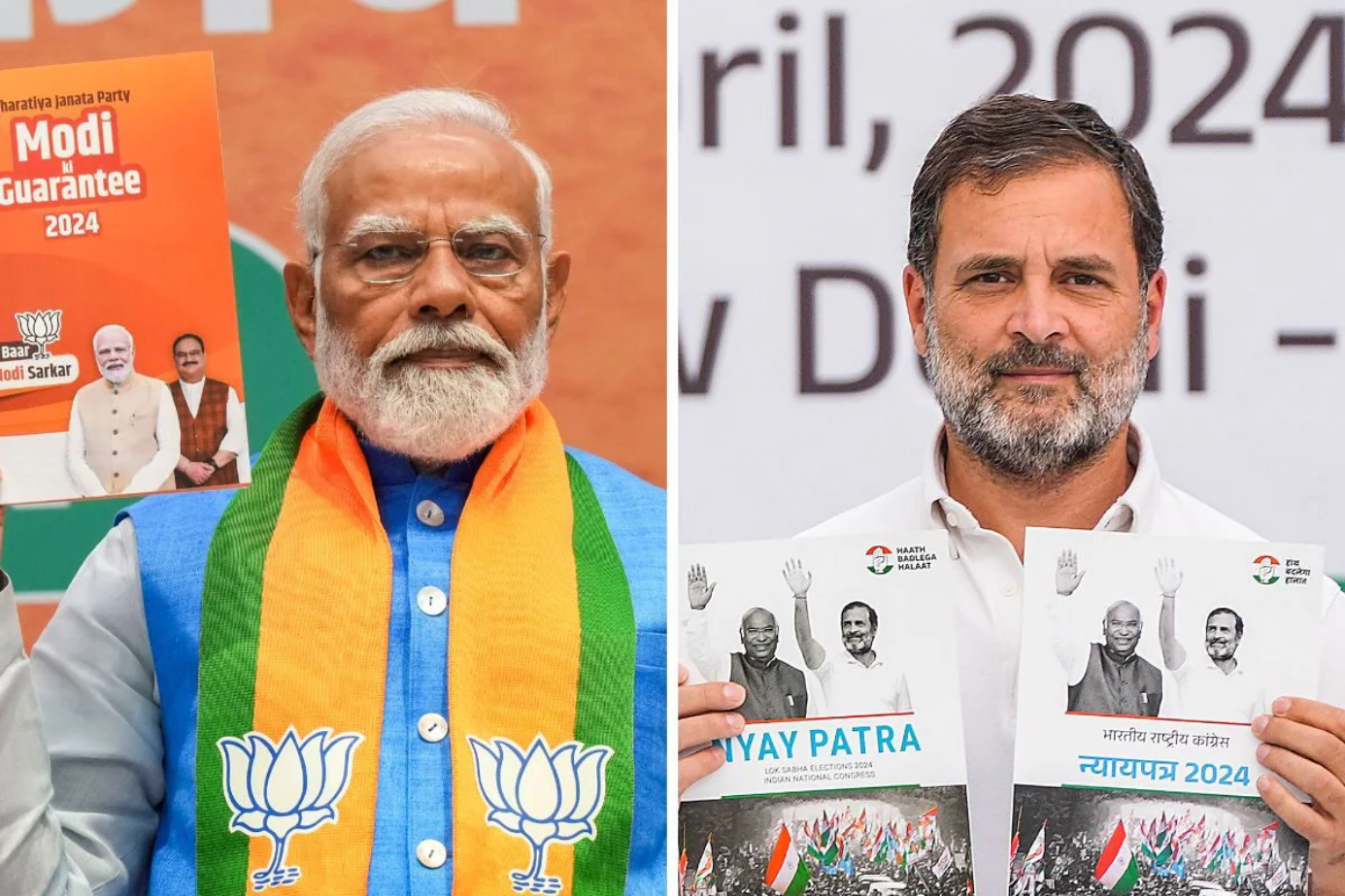
Following victories in Madhya Pradesh, Rajasthan, and Chhattisgarh, the BJP attributed its success to the traction gained by the Modi guarantees among voters. Prime Minister Modi, while inaugurating the government’s Viksit Bharat Sankalp Yatra to promote awareness about welfare schemes in the five states where elections were held, highlighted the popularity of these guarantees, particularly in areas where other parties had failed to inspire hope among the electorate.
The BJP aims to counter the guarantee-based politics of opposition parties, notably the Congress, which secured victories in Himachal Pradesh, Karnataka, and Telangana on the strength of promises made to voters. By emphasizing welfare initiatives alongside the Prime Minister’s mass appeal, the BJP hopes to effectively address the Congress’s hyperlocal campaign tactics, particularly witnessed in Karnataka.
Additionally, anti-corruption remains a major plank for the BJP, as seen in its successful targeting of the Congress over corruption issues in the recent elections. The party intends to maintain its emphasis on combating corruption alongside its welfare-centric approach leading up to the Lok Sabha elections.
The BJP has strategically cultivated a base of “labharthis” or welfare beneficiaries since around 2017-’18, claiming their growing support transcends traditional caste barriers and has contributed to electoral victories. With the introduction of the EWS quota, which provides a 10% reservation for the poorest among upper castes, the BJP aims to appeal to economically disadvantaged groups outside the framework of caste-based politics. Recognizing the electoral dividends of populist policies, the party has realized the importance of framing the narrative as a contest between the Modi guarantees and the promises of the opposition, rather than merely offering sops as electoral inducements.

